Note: I wrote this toward the end of 2019, but have not posted it before:
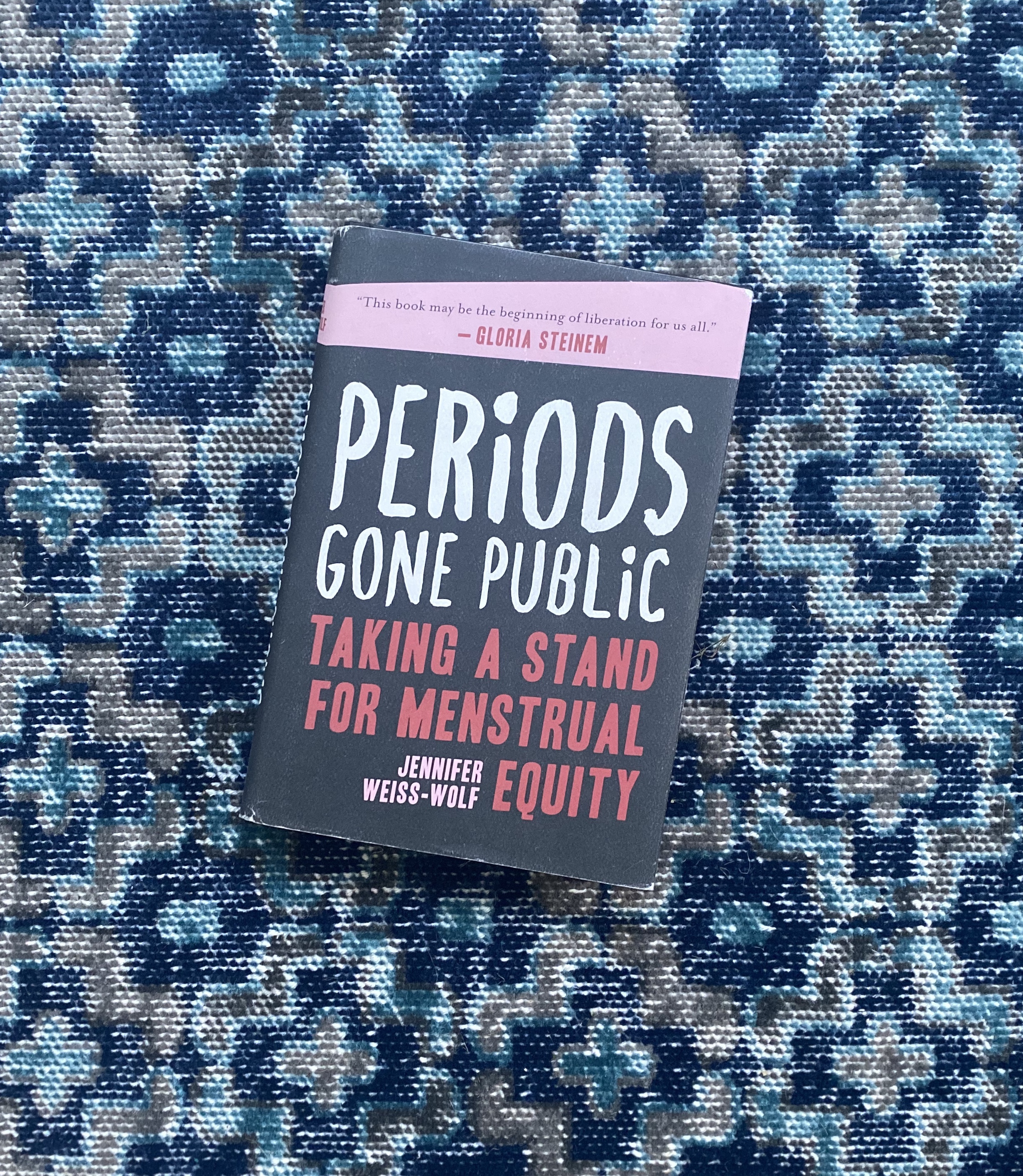
I am pretty pumped fired up about the topic of menstrual equity. I have been collecting pads, tampons, and other period products since the beginning of November, and have gotten awesome response from friends and family. I love you all! The book that I chose to read is called “Periods Gone Public: Taking a Stand for Menstrual Equity,” by lawyer and menstrual activist Jennifer Weiss-Wolf. This book includes a pretty comprehensive examination of period poverty, or lack of adequate access to menstrual products. While reading the book I felt simultaneously enraged and hopeful, which is how I often feel reading about issues of inequality and potential solutions.
Menstruation is a great example of a topic that is so enmeshed in stigma that it seems revolutionary to even talk about. As Weiss-Wolf puts it on page 11, periods have been stigmatized for as long as patriarchy has been around. You cannot separate period stigma from patriarchy, and you cannot separate stigma from access to care. In the beginning chapters, Weiss-Wolf shares the history and epistemology of menstrual-related words and products. She shares damning passages from religious texts and contends that claims of weakness/impurity are exactly how menstruation has been leveraged as a means to exclude women from full civic participation- in the church as well as in society at large (pg. 7). Just think of the ridiculous claims people make as to why women would be too emotional in an high stakes role (meanwhile, our current so-called president is throwing tantrums on the daily but OKKKKKK).
Honestly I could write a long research paper about the topics in this book but I want you to read it for yourself and share it with all of your friends. I tend to get carried away writing so I will try to keep it short…or at least not too long. Weiss-Wolf takes us on a global journey, where rates of access to products are abysmal in some places. Let’s look at this quote from pg. 29:
“Around the globe on any given day, more than 8 hundred million people are menstruating. At least 5 hundred million lack adequate resources for managing their periods.”
This leads to people with periods missing out of education, being exiled from society, prone to disease or infection, and sometimes being forced to have transactional sex for products. This is a topic in itself, but Weiss-Wolf highlights some very cool innovations to try to curb these products. It’s important that there are localized solutions, because every community has its own unique cultural practices and barriers. One great example of this is in Coimbatore India, where a local husband and entrepreneur invented a simple machine to produce inexpensive and disposable pads. This has allowed many people access to menstrual products, as well as creating jobs in the area. Weiss-Wolf includes a couple other really cool innovations in different parts of the world, localized to fill a specific need for a universal problem.
Being a lawyer and policy maker, Weiss-Wolf creates a good balance between innovation/giving and creating systemic change by advocating for policy changes. In our country, almost every state has a tax on tampons, because they are not considered to be necessities in most tax codes. After reading the book, three areas on the national level that are in need of the most change are the following: access to products for the homeless, access to products for those in prison, and access for people who are transgender or gender nonconforming. Again, Weiss-Wolf shares ways to get products to people in need, as well as policy changes we can advocate for which guarantees access to all. The capital-T Truth is that no effort that individuals make will ever be enough- we have to change the system. But that doesn’t mean we shouldn’t do all we can to give what we can to those in need.
Because of my background in women’s studies and women’s health, I feel I am a little more aware of issues of menstrual equity than the average citizen. But WOW there were so many eye-opening passages in this book. There are accounts and data about the experience of menstruating while homeless and while in prison. While I’ve thought about these issues before, I had never actually thought about the specifics. Like- what if you don’t have a tampon or pad? What if you don’t have access to privacy of any kind? The number of pads that people in prison receive on a monthly basis is abysmal. The most marginalized in our communities are not having their basic needs met, and this has dire consequences. Wow I could say SO much more about this. About just the stigma, the lack of public education related to menstruation and how that bleeds (get it?) into all policies related to women’s bodies (and people with vaginas). I could write a whole book looking specifically at homeless people with periods, or periods in prison, or having a period while trans in a country with LAWS ON THE BOOKS specifying archaic bathroom guidelines. I could write about menstrual access and education on a global level. But I am going to stop here for now and I sincerely hope that you check out this book for all the important information in it. I will be back to talk more about this soon, share about my donation drive (and hopefully inspire you to do one in your community!), and to give you information about policies that we can help to change.
 Annelyze That
One thought on ““Periods Gone Public: Taking a Stand for Menstrual Equity””