“Are you there God? It’s me, Margaret”: Revisiting the classic coming-of-age story

I devoured Judy Blume books as a child. I can’t remember exactly how many of her books that I’ve read, but looking at the list, I’m guessing 14. From that number alone, I would consider her to be one of the most prolific authors of my adolescence. Blume’s books are known to tackle real subjects that tweens face, such as navigating friendships, puberty, bullying, body changes, and more. Several of her books have been mainstays on banned lists for decades, because she writes about (important) topics such as menstruation, masturbation, body image, birth control, and sex. 

I don’t remember the specifics of many of the books that I’ve read, but I do remember reading “Are you There God? It’s Me, Margaret.” When the movie adaptation was released in 2023, my mom and I saw it in theaters. I recently decided to revisit both. I think the book holds up as a beautiful coming-of-age story for adolescent girls, and the movie does a wonderful job of staying true to the book. I think either medium would be a great tool for any 10-14ish year-old, especially one that will be experiencing menstruation, buying a bra for the first time, and other experiences of puberty. I’m not going to use the rest of this post as a review or a summary, but more so as a reflection of some of the aspects of the overall story and how the movie portrayed the plot point.  

The Puberty of it all: One of the major themes throughout the book, and one of the main reasons why I think it’s such an important read for young people, is Margaret’s journey into puberty. Buying a bra, praying and chanting for chest growth (who could forget “We must, we must, we must increase our bust!”), waiting for the first menstrual cycle, buying deodorant… I had forgotten just how BIG all of these moments felt, but this book and movie transport me right back. Blume and the filmmakers are able to portray these moments in a sensitive and honest way. Puberty is confusing, scary, and stigmatized (see: book bans) and I believe this story can help tweens feel seen and less alone.

Religion: The other major plot line running through the book is Margaret’s grappling with religiosity. With a Jewish dad and a Christian mom who was disowned by her parents due to marrying someone Jewish, Margaret’s parents have decided to raise Margaret without a religious tradition. Throughout the book, Margaret prays to God (she thinks, maybe), sometimes hilariously, like when praying for her chest to grow, and often tenderly. She spends the book exploring faiths, looking for God in different church services, but only ever feeling God when she is alone. Something I love about this storyline is that it doesn’t end wrapped in a bow. At the end of the book, Margaret remains confused about religion. She even abandons talking to God at one point, finding her way back by the end.

Changing bodies: There’s a character in the story named Laura Danker who has developed at a younger age than the rest of the girls in Margaret’s class, and is taller than all of the boys. Rumors circulate around Laura that she is much more sexually experienced than the rest of the girls, and she is bullied and picked on by her classmates. I did not remember this storyline and was pleased by its inclusion and nuance. Sexualization of girls and women is a huge problem in our society, and many women can remember the first time they were sexually harassed, often in their young teens. I think Blume was able to touch on this subject in an age-appropriate manner, while also reminding girls that it can be hard to be the one that goes through puberty first. 

Other things about the movie specifically that I loved: I enjoyed both my reread and rewatch of the movie, but the movie especially feels like a warm hug. It brought the book to life so beautifully, and felt both timeless and nostalgic. Here are some random things that I appreciated about the movie:

  • The actors: Rachel McAdams and Kathy Bates are just amazing, and Abby Ryder Fortson, who played Margaret, gave such an earnest performance
  • The early 1970s soundtrack and fashion
  • The expanded storyline of Barbara, Margaret’s mom. In the movie, Barbara is trying to reinvent herself, quitting her job and trying to fit the mold of a suburban mom. She joins every committee in the PTA and is miserable. At the end of the movie she’s back to teaching art classes and quits the PTA. 
  • The blink-and-you-miss-it cameo by Queen Judy herself

This reread and rewatch were a delight for me, and I think stories like Margaret are immensely important for young people to have at their disposal. 

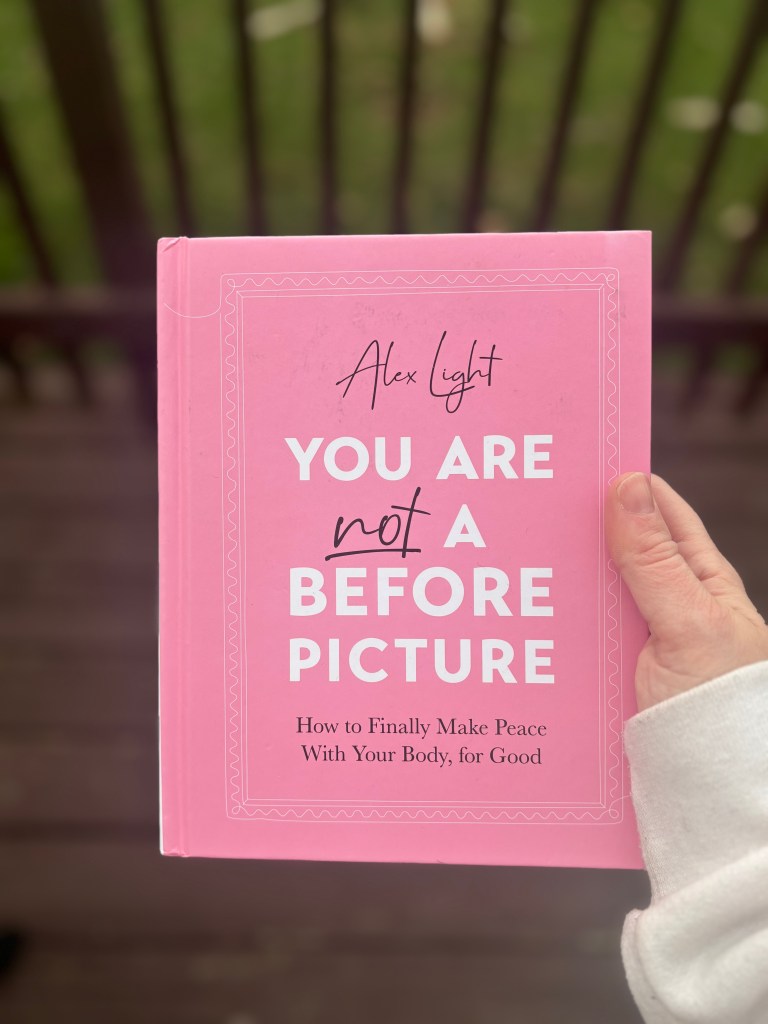
“You are Not a Before Picture” by Alex Light

2025 is not going to be known for being a body positive, or even a body neutral year. In many ways, it feels like our body ideals and cultural attitudes around food, bodies, and exercise are time traveling back toward the early 2000s. Diet culture is alive and thriving, and we need tools at our disposal to help combat all of the harmful messaging that diet culture engrains in us. Enter Alex Light’s You are Not a Before Picture: How to Finally Make Peace With Your Body, for Good. 

Light describes this book as a “body image bible,” and I tend to agree, as it is an expertly researched encyclopedia of all things body image: a history of diets, what happens to our bodies when we diet (spoiler: diets don’t work), beauty trends, the impact of the media, fitness, weight gain, and more. It really is a comprehensive guide to all things body image-related. As someone who is well-versed in body image, but hasn’t been able to immerse myself in the literature as much as I would like in the last few years, it was a great re-introduction to the genre. For someone struggling with body image, or just starting to learn about diet culture, this serves as a great primer. 

I found each chapter of this book to be well-researched, and I think that I will be returning to it over and over again, for both personal and professional purposes. My copy is already well-highlighted. One of my favorite chapters was about the history of diets, from the first-known diet book in the 1500s, to the weight-loss apps of the mid-2010s (this book was first published in 2022, so right before the Ozempic boom). Through learning about the ever-changing diet advice and beauty standards, it is clear that diets have always been a way to uphold the patriarchy.

Something I really appreciated about this book is Light’s acknowledgment of her identity and privilege and a straight-sized, cis white woman. Throughout the book, she interviews women in marginalized bodies to help us all gain a better understanding of the systems of oppression that help to maintain diet culture. She shares how misogyny, racism, homophobia and transphobia, and capitalism all contribute to the dangerous beauty standard that we all are pressured to adhere to. Light explains that body positivity has its roots in the radical political movement of fat acceptance, which was created for and by women of color. As described in the book, the body positivity movement has transformed into a place “dominated by privileged bodies” and commodified by content creators and brands. To that point, I often find this reality is often missing from the discourse by body image experts with Light’s (and my) privileges, so I was pleased with that portion of the book.

I could write an essay on each of the chapters of this book, and as stated previously, I will go back time and time again as I do delve deeper into specific topics. Throughout the book, Light also weaves her own experiences with an eating disorder and body image struggles, and I am grateful for her vulnerability. She is also a great follow on instagram (@alexlight_ldn). This book belongs in every body image collection.

Soft Colors

8/3/21

Stay soft

The world hardens you 

They tell us to keep our emotions inside

But can’t you see

Inside of me is a swirl of blue, red, pink, green, yellow

Sad angry happy jealous grieving sharing loving

They give the world color

I set them free and they encircle the air

Enveloping trees and buildings and people, 

mixing with others’ greens and blues and reds.

Stay soft

They say that I am me and he is he

But don’t you see that he is we?

The man begging on the street corner is me

His colors are on full display

His blues are spilling onto the sidewalk

Can’t you feel them on your toes?

Don’t look away now

I reach inside of me 

I give him some of my yellow

We are both a little more green

But we are soft and full of color

Alive and real.

Anxiety

9/6/20

Sometimes when i’m feeling joy

I get sad

A knot rises in my stomach and darkens the sun

I know what it is

A familiar foe

You probably know it too

Anxiety

Sometimes active, sometimes dormant, 

It’s always there

Waiting to complicate a pure moment

I’m laughing with my partner and suddenly

(the good doesn’t last you know)

Anxiety whispers into my heart

I’m sharing an intimate moment with my family

(yes but think about the pain of the past)

It tries to draw me away from now

From love

From light 

From truth

It lies.

You are pure light

You are the sun and the moon

The whole galaxy swims inside of you (and you)

You are a burst of golden light

You are not your anxiety

(And I am not mine)

It lies

It lies

Period. End of Sentence.

I wrote this post several months ago, but am publishing it now:

If there’s one thing that gets people excited about movies, it’s menstruation, am I right?? Okay, maybe that’s wishful thinking, but I DO hope that after reading this post, I have motivated you to watch “Period. End of Sentence,” streaming now on Netflix. This short film won an Academy award in 2018, among other accolades, including an award at the Cleveland Film Fest. I’m very proud to say that my grandfather is the person who first told me about the movie, and I finally watched it, knowing it would be perfect for this month!

The film, directed by Rayka Zehtabchi, follows a local group of women in Hapur, India, as they learn how to operate a machine that makes low-cost and biodegradable sanitary pads which they sell to women at a low cost. This helps to improve hygiene and health as well as begins to shed the strong taboos and stigma in India surrounding menstruation. I knew of this phenomenon from the book “Periods Gone Public,” (which I discuss HERE) when author Jennifer Weiss-Wolf goes into extensive detail. Arunachalam Murugananthan, now a high-profile name in this work, is the creator of “the world’s foremost micro enterprise model: a manufacturing device and process for producing low-cost, locally made pads.” (Pg. 33). Period. End of Sentence shows Murugananthan demonstrating the use of his machine to the women in Hapur, who are then off and running. They start producing, using, and selling their sanitary pads. It’s cool to see a visual representation of what I read about.

Here are some other observations and what I learned from the film:

  • I knew that menstruation was stigmatized in parts of India, but I wasn’t sure just HOW taboo of a subject it was until I watched the movie. Men had no idea about the function of the menstrual cycle, what it was, or how often it occurred. They feigned ignorance at the mention of the word as well. Women and girls were embarrassed, bashful, and giggly when first asked about menstrual-related questions.
  • Many women didn’t know what sanitary pads were, or had never been able to afford them, before they started making and selling them. One of the women in the film says that “when there is a patriarchy, it takes a long time to talk about feminism, even among women,” and it also takes a long time for people to be able to talk about periods in both public and private spaces.
  • Women market and distribute their own pads. The women in Hapur decided to call their pads “fly,” because “we’ve worked very hard for women so we want them to rise and fly”
  • The process of marketing and selling pads is very community and grassroots based. Makers of the sanitary pads travel to different villages to demonstrate how to wear them and do absorbency tests. It was initially hard to sell pads to markets because they are so male-dominated, so the women began by selling door-to-door. Even then, sellers were greeted with a lot of laughter and embarrassment, but then women started to buy them, sometimes because buying pads from the store is seen as too embarrassing.
  • This is a first job for many of the women that are now making and distributing pads, and they are feeling financial freedom for the first time.

We know that stigma can lead to serious, harmful consequences. In “Periods Gone Public,” Weiss-Wolf writes that of 355 million people who menstruate in India, only 12 percent use any sanitary products at all (pg. 29), and goes on to say this:

“Entrenched stigma marginalizes menstruation and exacerbates the conditions of poverty, not only undermining the health and endangering the safety and lives of women and girls, but also curtailing their opportunities. This is, effectively, a denial of their equal chance to obtain an education, to acquire the tools to escape poverty and contribute to the economy, and to participate fully and productively in civic life.” (Pg. 31)

I really like that this film depicts a localized solution to the problem. Those of us who are not from India can’t fully understand the cultural stigmas and understandings around health. As Weiss-Wolf puts it, “in the case of menstruation, simple and local is very often a right-sized and optimal approach.” (Pg. 32) I think the best path for us to take is to support, advocate for, and cheer on the work that locals are doing in their own community, and do the same in ours. This leads me to my next blog post- I will be going into more depth surrounding menstruation in homeless shelters and prisons in the US. I do hope that you take the time to watch this film and learn more about this issue and innovative solutions.

For more, check out:
www.thepadproject.org

Sources:
“Period. End of Sentence”
Periods Gone Public by Jennifer Weiss-Wolf

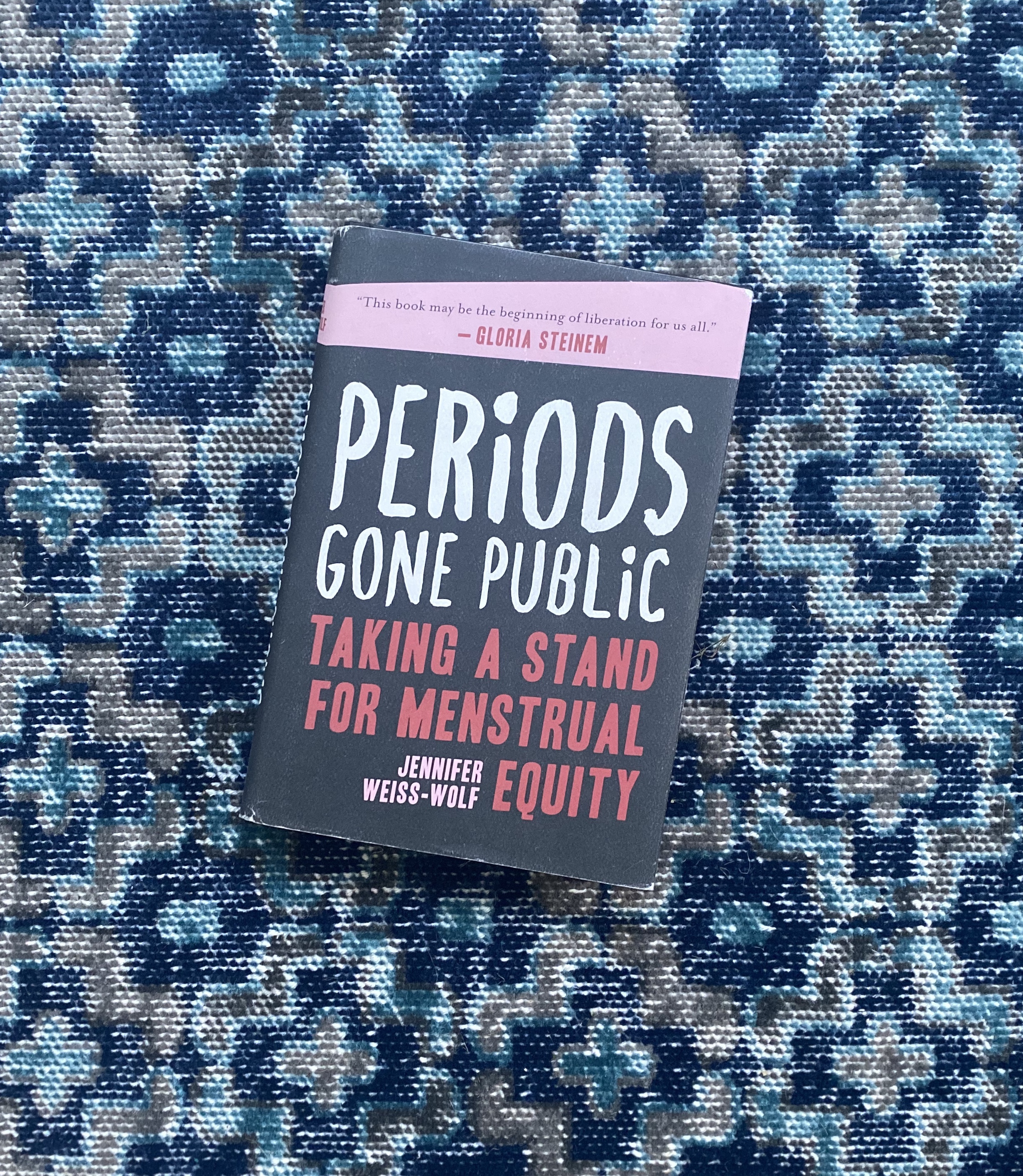
“Periods Gone Public: Taking a Stand for Menstrual Equity”

Note: I wrote this toward the end of 2019, but have not posted it before:

I am pretty pumped fired up about the topic of menstrual equity. I have been collecting pads, tampons, and other period products since the beginning of November, and have gotten awesome response from friends and family. I love you all! The book that I chose to read is called “Periods Gone Public: Taking a Stand for Menstrual Equity,” by lawyer and menstrual activist Jennifer Weiss-Wolf. This book includes a pretty comprehensive examination of period poverty, or lack of adequate access to menstrual products. While reading the book I felt simultaneously enraged and hopeful, which is how I often feel reading about issues of inequality and potential solutions.

Menstruation is a great example of a topic that is so enmeshed in stigma that it seems revolutionary to even talk about. As Weiss-Wolf puts it on page 11, periods have been stigmatized for as long as patriarchy has been around. You cannot separate period stigma from patriarchy, and you cannot separate stigma from access to care. In the beginning chapters, Weiss-Wolf shares the history and epistemology of menstrual-related words and products. She shares damning passages from religious texts and contends that claims of weakness/impurity are exactly how menstruation has been leveraged as a means to exclude women from full civic participation- in the church as well as in society at large (pg. 7). Just think of the ridiculous claims people make as to why women would be too emotional in an high stakes role (meanwhile, our current so-called president is throwing tantrums on the daily but OKKKKKK).

Honestly I could write a long research paper about the topics in this book but I want you to read it for yourself and share it with all of your friends. I tend to get carried away writing so I will try to keep it short…or at least not too long. Weiss-Wolf takes us on a global journey, where rates of access to products are abysmal in some places. Let’s look at this quote from pg. 29:
“Around the globe on any given day, more than 8 hundred million people are menstruating. At least 5 hundred million lack adequate resources for managing their periods.”
This leads to people with periods missing out of education, being exiled from society, prone to disease or infection, and sometimes being forced to have transactional sex for products. This is a topic in itself, but Weiss-Wolf highlights some very cool innovations to try to curb these products. It’s important that there are localized solutions, because every community has its own unique cultural practices and barriers. One great example of this is in Coimbatore India, where a local husband and entrepreneur invented a simple machine to produce inexpensive and disposable pads. This has allowed many people access to menstrual products, as well as creating jobs in the area. Weiss-Wolf includes a couple other really cool innovations in different parts of the world, localized to fill a specific need for a universal problem.

Being a lawyer and policy maker, Weiss-Wolf creates a good balance between innovation/giving and creating systemic change by advocating for policy changes. In our country, almost every state has a tax on tampons, because they are not considered to be necessities in most tax codes. After reading the book, three areas on the national level that are in need of the most change are the following: access to products for the homeless, access to products for those in prison, and access for people who are transgender or gender nonconforming. Again, Weiss-Wolf shares ways to get products to people in need, as well as policy changes we can advocate for which guarantees access to all. The capital-T Truth is that no effort that individuals make will ever be enough- we have to change the system. But that doesn’t mean we shouldn’t do all we can to give what we can to those in need.

Because of my background in women’s studies and women’s health, I feel I am a little more aware of issues of menstrual equity than the average citizen. But WOW there were so many eye-opening passages in this book. There are accounts and data about the experience of menstruating while homeless and while in prison. While I’ve thought about these issues before, I had never actually thought about the specifics. Like- what if you don’t have a tampon or pad? What if you don’t have access to privacy of any kind? The number of pads that people in prison receive on a monthly basis is abysmal. The most marginalized in our communities are not having their basic needs met, and this has dire consequences. Wow I could say SO much more about this. About just the stigma, the lack of public education related to menstruation and how that bleeds (get it?) into all policies related to women’s bodies (and people with vaginas). I could write a whole book looking specifically at homeless people with periods, or periods in prison, or having a period while trans in a country with LAWS ON THE BOOKS specifying archaic bathroom guidelines. I could write about menstrual access and education on a global level. But I am going to stop here for now and I sincerely hope that you check out this book for all the important information in it. I will be back to talk more about this soon, share about my donation drive (and hopefully inspire you to do one in your community!), and to give you information about policies that we can help to change.

BLM May 2020

This is America. Don’t catch you slippin’ now. – Childish Gambino, “This is America,” 2018

“I must say tonight that a riot is the language of the unheard. And what is it America has failed to hear? It has failed to hear that the plight of the Negro poor has worsened over the last twelve or fifteen years. It has failed to hear that the promises of freedom and justice have not been met. And it has failed to hear that large segments of white society are more concerned about tranquility and the status quo than about justice and humanity.”- MLK Jr, “The Other America,” 1967 (emphasis my own)

Well. Here we are again. No, that’s not right. Here we still are. In the midst of a global pandemic, America has come out of its homes in force to protest the killings of unarmed black Americans. Ahmaud Arbery- shot dead in February while going for a run NEAR HIS HOME in Georgia. It isn’t until the beginning of this month (May) that the video emerges, and arrest begin to be made. Breonna Taylor- shot dead by police IN HER OWN HOME in Louisville in mid-March. No arrests have been made. Tony Mcdade- black trans man shot dead last week by police in Florida. George Floyd- murdered by police last week after being arrested in Minneapolis. For almost 9 minutes, a cop restrained Floyd with a knee on his neck, as he repeatedly begged for his mother and told the police that he couldn’t breathe. Floyd was pronounced dead within the hour.

Four lives, gone. And it just keeps happening. All of these precious unique sons and daughters are now statistics, added to the long list of black lives lost to police brutality and systemic racism. Amidst a pandemic that has taken the lives of over 100,000 Americans, thousands upon thousands of people have turned up to protest against these senseless deaths. Speaking of coronavirus, lest we forget that Black and Brown Americans are dying of the virus at disproportionate rates. If any of this is surprising, you haven’t been paying attention. There is SO much to be said and done about racism in America. I will never stop reading, writing, protesting, marching, crying, yelling, learning and unlearning in the name of social justice. It is not and cannot be the job of Black people to move out of their own oppression. Only the oppressors can do that. All white people benefit from whiteness. Does that make you uncomfortable? It should. So while there is much work to be done, I am providing a few simple things I can do as a white ally, and what I hope you do if you are white too:

1.) Unlearn/relearn the true history of The United States. Friends: the system is not broken. The system was built like this. Black people in America were literally forced across the world in chains, enslaved to the white man. They literally built the country. Our “democracy” was founded on a fallacy, our capitalist economy was built by slave labor. After the Civil War, as Reconstruction began, laws were put into place to ensure that Black Americans couldn’t receive adequate health care, education, or property rights. The Jim Crow era began. 5000 Blacks (that we know of) were lynched in the first half of the 20th Century. After WW2, we had bombings and rioting and sit-ins and civil rights marches and assassinations. Student leaders of anti-race movements were being killed. And then there was crack in the 80s and welfare in the 90s and police killings in the 2000s. Nothing has changed. If you think otherwise, your privilege has allowed you to remain blind to the systemic racism that is threaded into every facet of our democracy.

Most of us learned an extremely sanitized, uncomplicated, unnuanced version of slavery and civil rights in school. There are countless resources for educating yourself. There are wonderful lists of anti-racist literature to read. There are documentaries and shows and podcasts. It’s our responsibility as white people to unlearn what we have been taught, question why we aren’t taught the truth, And re-educate ourselves. Don’t know where to start? Watch the documentary “The 13th” and listen to the podcast “1619.” Believe me.

2.) Shut up and listen to Black people’s experiences. Just SHUT UP. We as white people have no idea what it’s like to live as a Black person in America. One of the most important things we can do is simply listen to Black people’s experiences. Yes I understand the irony of me, a white person, writing this. But I hope that I can use this medium and my privilege to lift up and amplify Black voices, and pass along their work. DON’T ask your Black friends to explain racism to you. We have been living in a racist country and have all the resources in the world that we need to educate ourselves. DO listen to them, sit with that experience, and understand their perspective. It is up to US as white people to end racism, but we can’t pretend to understand the true depths of it without amplifying Black voices.

3.) Call out racists. Call out your friend, your family member, your coworker. Language MATTERS. Language can be weaponizing. Speaking about people as if they are lesser than opens the door to treat people as if they are lesser than. When people are treated as lesser than, its easy for them to be perceived as less than human. When someone is perceived as less than human violence can be incited upon them more easily. When a whole culture has been poisoned by both subtle and explicit racist language for 250 years… well, here we are.

There is so much more that we all can and should do as white people, and, more importantly, as people who care about and love other people. Donate to the family funds of the slain, donate to Black Lives Matter, familiarize yourself with the mission and history of the movement. This is only the very beginning of the conversation. Sending love and JUSTICE to all. Black Lives Matter.
Reading “Americanah”

by Chimamanda Ngozi Adichie

Hi reader/friend! I don’t think this changes the perspective I had at all, but full transparency: I wrote this blog post at the beginning of December. I have a few drafts that I haven’t published yet, and this is one of them! More of those will be published soon, as well as new/current posts! Enjoy 🙂

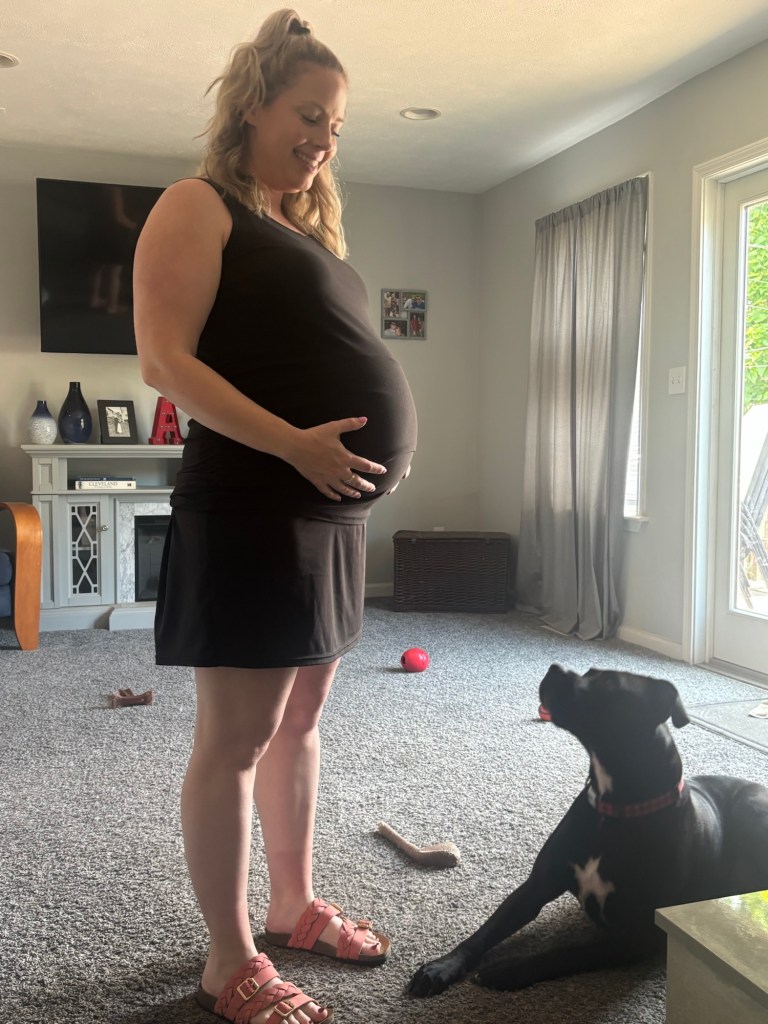
Evidence I read this in the winter…

I just finished reading the novel “Americanah” by Chimamanda Ngozi Adichie and wow is it a masterpiece. I had an idea it was going to be impactful given all of the accolades the book has received since it was published in 2013. I knew of Adichie from her brilliant TED talk about feminism. Adichie manages to weave together a love story with brilliant commentary on blackness. As a New York reviewer put it, “Adichie is to blackness what Philip Roth was to Jewishness: its most obsessive taxonomist, it’s staunchest defender, and its greatest critic.”

As with all of my blog posts about books, this isn’t a review, and I’m not going to give anything away, because I want to encourage YOU to read the book. But I do want to give a brief synopsis. Americanah follows two main protagonists, Ifemelu and Obinze, and spans a couple decades of their lives. They went to school together in Nigeria and assumed a romantic relationship in high school. Obinze dreams of going to America, but in a sick twist of fate it is Ifemelu who is able to get a visa and move to America, while Obinze stayed and later lived undocumented in London. Readers learn of the reality of living in America and the U.K.  as an immigrant, especially as a non-American black person. Ifemelu starts a blog and shares her experiences connected to race. Adichie cleverly includes a lot of commentary on race, as Ifemelu’s blog posts are interwoven into the story line.

I dog-earred so many pages with quotes from the book that I found impactful or important. I won’t share all of them considering it’s a 600 page novel, but I am going to share quite a few. I can’t think of a better way to learn about someone else’s life experience than by reading their own words, listening, and immersing yourself in their story:

“She said…that it was absurd how women’s magazines forced images of small-boned, small-breasted white woman on the rest of the multi-boned, multi-ethnic world of women to emulate” – pg. 219

“…all understood the fleeing from war, from the kind of poverty that crushed human souls, but they would not understand the need to escape from the oppressive lethargy of choicelessness.”- pg. 341

“I came from a country where race was not an issue; I did not think of myself as black and I only became black when I came to America.”- pg. 359

“Racism should never have happened and so you don’t get a cookie for reducing it.”- pg. 378

“In America, racism exists but racists are gone.” (DRIPPING with sarcasm of course)- pg. 390

“Blacks actually don’t WANT it to be about race. So when they say something is about race, it’s maybe because it actually is?”- pg. 404 

“…of course we’re all prejudiced, but racism is about the power of the group and in America it’s white folks who have that power.”- pg. 405

“It is the final infantilization and informalization of America! It portends the end of the American empire, and they are killing themselves from within!”- pg. 489

I hope you go read this book!! If you’ve read it, what were your thoughts? Let me know!

Pain/Hope

What does pain feel like?

The dull ache of the heart or

The knotting of the stomach or

Unending tears

Pain feels like a memory is trapped in the chest

Like chaos buzzing in the cells.

Like the brain is a film reel of the past

The mind is a never-ending spiral (turtles all the way down)

What does hope feel like? (The thing with feathers)

A single glimmer of light

A small sparkle

A flame that may dim all the way down

But never goes out

AP 1/4/20

*Turtles all the way Down references the title of a John Green novel

*”Hope is the thing with feathers” comes from Emily Dickinson

Miles Away

I sit at my dining room table, glancing at the fridge where styrofoam boxes of leftovers await me and yet-

Half a mile away the familiar rotation of homeless people asks for anything at the entrance of the highway

I sit at my table, warm inside on a January day, with our dog on our quiet street where we take long walks in the neighborhood, the same neighborhood where the babies I nanny play freely and I run through with my headphones on and yet-

2.2 miles away, 12-year-old Tamir Rice was killed by a cop in cold blood while playing with a toy gun in the park (West Blvd) and

10 miles away, black babies are dying at a rate of 3 times that of white babies (Hough Ave)

I look at my water bottle filled with the tap from the kitchen and yet-

144 miles away, there hasn’t been safe drinking water in over 5 years (Flint) and

1300 miles away Indigenous People have again been stripped of their land and right to clean water (Standing Rock)

I’m safe in my home while

6000 miles away, innocent humans brace for air-strikes coming from my country (Tehran) and

9700 miles away the Earth is on fire and millions of animals are perishing (Australia)

I sit

I sit and yet.

AP 1/4/20