2025 is not going to be known for being a body positive, or even a body neutral year. In many ways, it feels like our body ideals and cultural attitudes around food, bodies, and exercise are time traveling back toward the early 2000s. Diet culture is alive and thriving, and we need tools at our disposal to help combat all of the harmful messaging that diet culture engrains in us. Enter Alex Light’s You are Not a Before Picture: How to Finally Make Peace With Your Body, for Good.
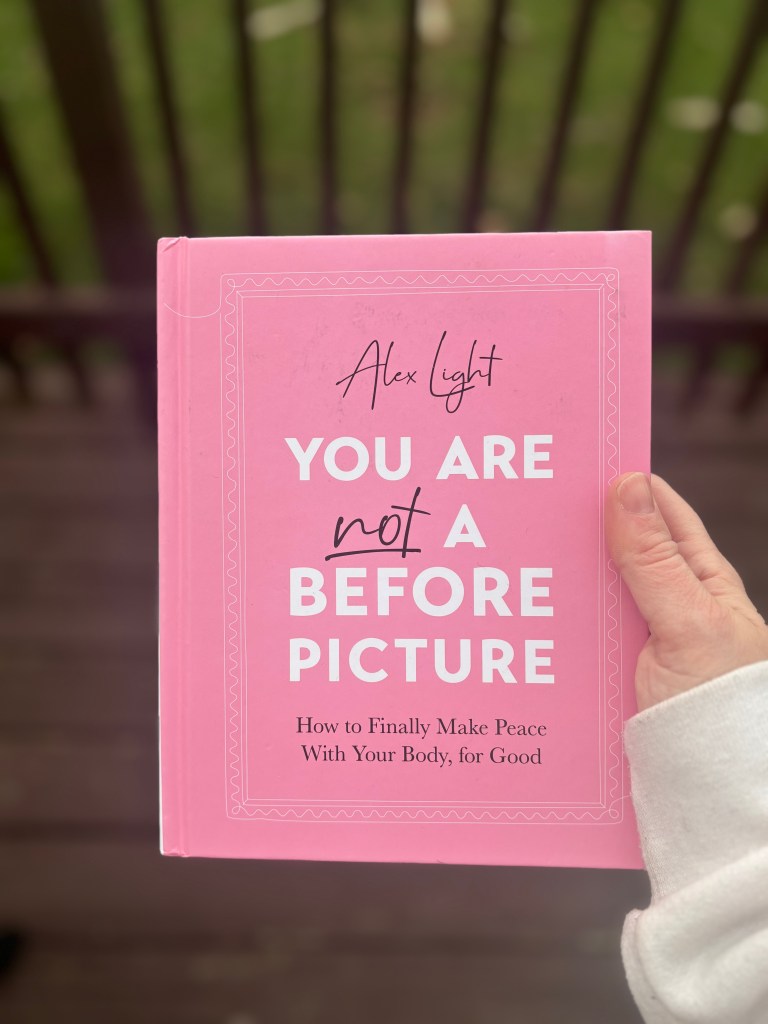
Light describes this book as a “body image bible,” and I tend to agree, as it is an expertly researched encyclopedia of all things body image: a history of diets, what happens to our bodies when we diet (spoiler: diets don’t work), beauty trends, the impact of the media, fitness, weight gain, and more. It really is a comprehensive guide to all things body image-related. As someone who is well-versed in body image, but hasn’t been able to immerse myself in the literature as much as I would like in the last few years, it was a great re-introduction to the genre. For someone struggling with body image, or just starting to learn about diet culture, this serves as a great primer.
I found each chapter of this book to be well-researched, and I think that I will be returning to it over and over again, for both personal and professional purposes. My copy is already well-highlighted. One of my favorite chapters was about the history of diets, from the first-known diet book in the 1500s, to the weight-loss apps of the mid-2010s (this book was first published in 2022, so right before the Ozempic boom). Through learning about the ever-changing diet advice and beauty standards, it is clear that diets have always been a way to uphold the patriarchy.
Something I really appreciated about this book is Light’s acknowledgment of her identity and privilege and a straight-sized, cis white woman. Throughout the book, she interviews women in marginalized bodies to help us all gain a better understanding of the systems of oppression that help to maintain diet culture. She shares how misogyny, racism, homophobia and transphobia, and capitalism all contribute to the dangerous beauty standard that we all are pressured to adhere to. Light explains that body positivity has its roots in the radical political movement of fat acceptance, which was created for and by women of color. As described in the book, the body positivity movement has transformed into a place “dominated by privileged bodies” and commodified by content creators and brands. To that point, I often find this reality is often missing from the discourse by body image experts with Light’s (and my) privileges, so I was pleased with that portion of the book.
I could write an essay on each of the chapters of this book, and as stated previously, I will go back time and time again as I do delve deeper into specific topics. Throughout the book, Light also weaves her own experiences with an eating disorder and body image struggles, and I am grateful for her vulnerability. She is also a great follow on instagram (@alexlight_ldn). This book belongs in every body image collection.
 Annelyze That