I wrote this post several months ago, but am publishing it now:
If there’s one thing that gets people excited about movies, it’s menstruation, am I right?? Okay, maybe that’s wishful thinking, but I DO hope that after reading this post, I have motivated you to watch “Period. End of Sentence,” streaming now on Netflix. This short film won an Academy award in 2018, among other accolades, including an award at the Cleveland Film Fest. I’m very proud to say that my grandfather is the person who first told me about the movie, and I finally watched it, knowing it would be perfect for this month!
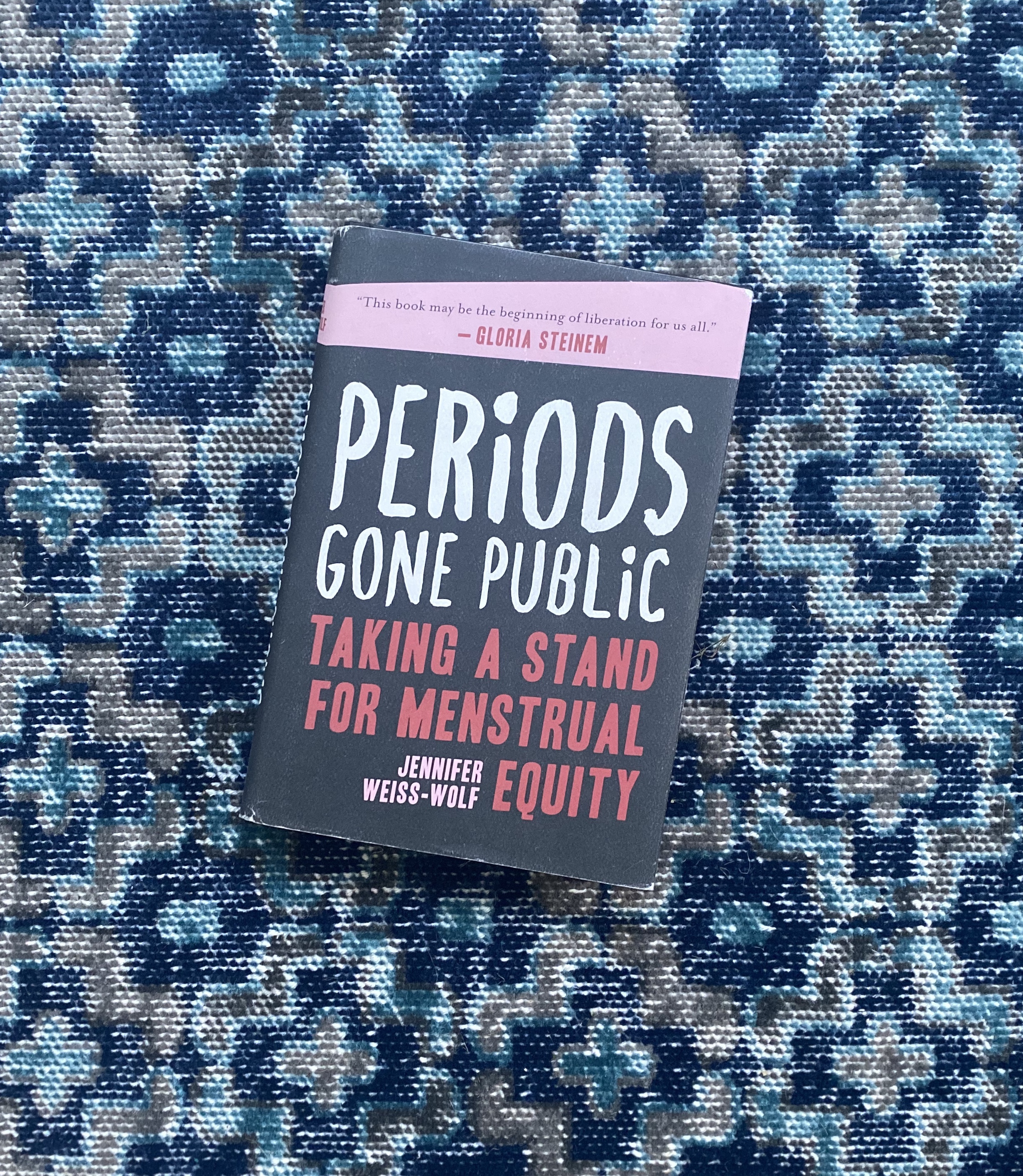
The film, directed by Rayka Zehtabchi, follows a local group of women in Hapur, India, as they learn how to operate a machine that makes low-cost and biodegradable sanitary pads which they sell to women at a low cost. This helps to improve hygiene and health as well as begins to shed the strong taboos and stigma in India surrounding menstruation. I knew of this phenomenon from the book “Periods Gone Public,” (which I discuss HERE) when author Jennifer Weiss-Wolf goes into extensive detail. Arunachalam Murugananthan, now a high-profile name in this work, is the creator of “the world’s foremost micro enterprise model: a manufacturing device and process for producing low-cost, locally made pads.” (Pg. 33). Period. End of Sentence shows Murugananthan demonstrating the use of his machine to the women in Hapur, who are then off and running. They start producing, using, and selling their sanitary pads. It’s cool to see a visual representation of what I read about.
Here are some other observations and what I learned from the film:
- I knew that menstruation was stigmatized in parts of India, but I wasn’t sure just HOW taboo of a subject it was until I watched the movie. Men had no idea about the function of the menstrual cycle, what it was, or how often it occurred. They feigned ignorance at the mention of the word as well. Women and girls were embarrassed, bashful, and giggly when first asked about menstrual-related questions.
- Many women didn’t know what sanitary pads were, or had never been able to afford them, before they started making and selling them. One of the women in the film says that “when there is a patriarchy, it takes a long time to talk about feminism, even among women,” and it also takes a long time for people to be able to talk about periods in both public and private spaces.
- Women market and distribute their own pads. The women in Hapur decided to call their pads “fly,” because “we’ve worked very hard for women so we want them to rise and fly”
- The process of marketing and selling pads is very community and grassroots based. Makers of the sanitary pads travel to different villages to demonstrate how to wear them and do absorbency tests. It was initially hard to sell pads to markets because they are so male-dominated, so the women began by selling door-to-door. Even then, sellers were greeted with a lot of laughter and embarrassment, but then women started to buy them, sometimes because buying pads from the store is seen as too embarrassing.
- This is a first job for many of the women that are now making and distributing pads, and they are feeling financial freedom for the first time.
We know that stigma can lead to serious, harmful consequences. In “Periods Gone Public,” Weiss-Wolf writes that of 355 million people who menstruate in India, only 12 percent use any sanitary products at all (pg. 29), and goes on to say this:
“Entrenched stigma marginalizes menstruation and exacerbates the conditions of poverty, not only undermining the health and endangering the safety and lives of women and girls, but also curtailing their opportunities. This is, effectively, a denial of their equal chance to obtain an education, to acquire the tools to escape poverty and contribute to the economy, and to participate fully and productively in civic life.” (Pg. 31)
I really like that this film depicts a localized solution to the problem. Those of us who are not from India can’t fully understand the cultural stigmas and understandings around health. As Weiss-Wolf puts it, “in the case of menstruation, simple and local is very often a right-sized and optimal approach.” (Pg. 32) I think the best path for us to take is to support, advocate for, and cheer on the work that locals are doing in their own community, and do the same in ours. This leads me to my next blog post- I will be going into more depth surrounding menstruation in homeless shelters and prisons in the US. I do hope that you take the time to watch this film and learn more about this issue and innovative solutions.
For more, check out:
www.thepadproject.org
Sources:
“Period. End of Sentence”
Periods Gone Public by Jennifer Weiss-Wolf
 Annelyze That